

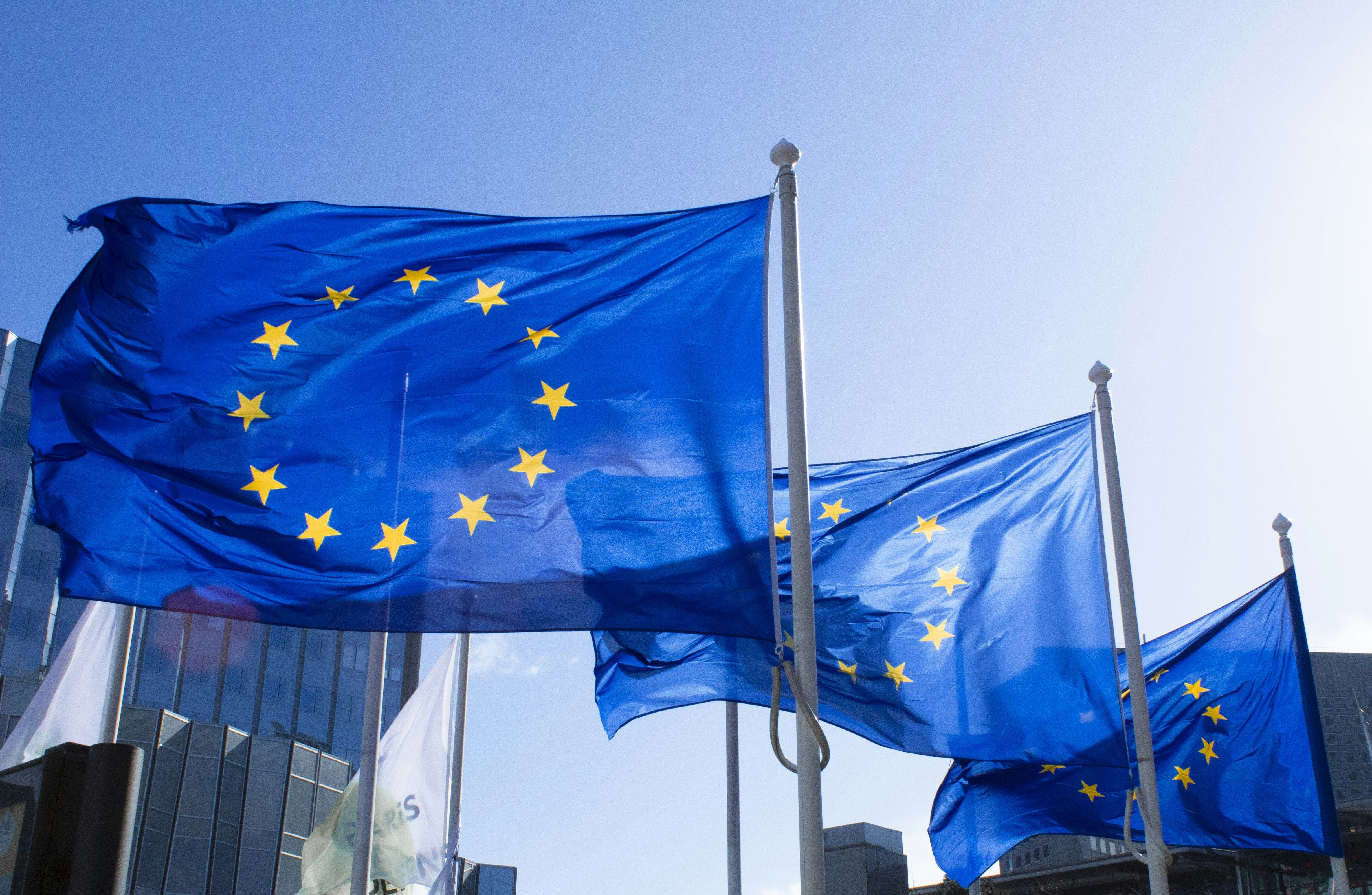
Photo by ALEXANDRE LALLEMAND on Unsplash.
Well, seemingly a lot , and then again possibly not so much. There was a fair bit of back and forth between Canada and the EU over what role and relationship Canada could, or is likely to play, in a heightened and closer relationship with the EU. It started out with von der Leyen’s extending to Canada the label of ‘associate member’ of the EU during talks in Montreal at an EU-Canada summit this week.
Just before discussing that, however, I should mention I have posted a fair bit on Canada in the last few weeks. For me that is unusual. But it follows on from the current Canadian Prime Minister acting on a variety of initiatives that aim to extend Canada’s ‘strategic autonomy’. The reason of course is Trump and his quite negative and dismissive attitude toward Canada, musing that it should be the 51st state. It is hardly surprising then that Canada’s leadership is reacting to such threatening behavior from this current U.S. Administration.
So what is up with Canada and the EU? President von der Leyen laid it out quite nicely earlier in the week in a speech at the C.D. Howe Institute, one of Canada’s premier research institutes, as the two – Canada and the EU organized for a Canada-EU summit in Montreal.
“Of course, Canada cannot become a full-fledged member of the EU because of geography, but we both want to bring our relationship to the highest level possible. This is why we are discussing the idea of Canada becoming the first associate member of the European Union. Our idea is simple: it is an “association without accession.” But we can replace accession with a “common ambition and vision.” We can build a partnership that comes closer to membership than anything we have done before. So how do we get there?”
Now the use of that label caused a bit of an uproar among some EU members, such as Germany and France. In the end, however, whatever the relationship is called, it is clear that the two are seeking significantly closer ties:
“First, it means closer alignment on policies. We can work on everything, from AI and climate to energy and security; you just name it. Second, it means closer alignment on governance. It means more work shared by the European Commission and the Canadian government, for example. This cooperation could also entail Parliament to Parliament, between our two parliaments; and Court to Court. And third, it means closer alignment in each other’s programmes.”
“This is why we will deepen Canada’s engagement in Europe’s Erasmus+ programme, so that more young people have a chance to meet and learn from one another. We are also working to strengthen Canada’s participation in the next generation of Horizon Europe, so that our most brilliant minds – researchers and scientists – can collaborate and innovate together. And we are working together on skills and qualifications, so that professionals can work more easily on both sides of the Atlantic.”
“So, in a nutshell, that and much more is what associate membership is all about. Open only to our closest partners outside of Europe, who are ready to open a new frontier together – and to chart the course together, to think beyond the terms of our partnership today, towards the most ambitious version of what we can build. And I must say: I can think of no better partner than Canada to embark on this journey with us.”
They will call it what they will or can but the objective appears to be clear as set out in this recent article from the Globe and Mail:
“Canada and the European Union launched an “Alliance for the Future” Friday to weave their economies, defence industries and technology sectors together, committing to an “ever-closer association” that would fall short of full EU membership.”
“The driving force behind this summit and closer economic and security ties between Ottawa and Brussels is building a bulwark against the increasingly protectionist and unpredictable United States under Donald Trump. The President last month disparaged “associate membership” in the EU for Canada and threatened trade reprisals.”
“The meeting included a new financial commitment from Canada, which announced it is joining the EU’s Ukraine Support Loan program. The €90-billion loan covers Ukraine’s budget and defence needs for 2026 and 2027, and Britain became the first non-EU country to join it in July.”
“Mr. Carney told reporters Canada is initially pledging €500-million, or nearly $780-million, to the Ukraine loan program.”
The second bit of news this week was the release by the federal government of Canada of a national security strategy. As pointed out by Steven Chase in the Globe and Mail:
“The Plan for a Stronger Canada, released Thursday, is the first national security strategy from Ottawa in more than two decades. Only 13 pages long, it’s a framework guiding the development of five new detailed national policies for defence, foreign affairs, economic security, public safety and intelligence. A new foreign policy will be released in about one month with others to follow, the government says.”
“Senior officials at a briefing Thursday said threats facing Canada are increasingly complex, ranging from climate change, terrorism, pandemics to cyberattacks, cutting-edge artificial intelligence and the increasing possibility of a major war.”
“Officials did not say where specifically war might break out but some European leaders and military commanders have said that by 2029, Russia will have the capacity to attack another North Atlantic Treaty Organization country.”
“Prime Minister Mark Carney’s office in a statement said he plans to convene a first ministers’ meeting on national security to strengthen co-ordination with provincial and territorial governments. Ottawa will also introduce legislative proposals to modernize national-security legislation within a year, it said.”
Unsurprisingly, it would seem the underlying logic of this plan is designed to enhance Canada’s strategic autonomy:
“A major theme of this new strategy is “strategic autonomy,” an expansive view of security that Mr. Carney has previously defined as a country’s ability to act independently for its own national and economic interests rather than being vulnerable to coercion from superpowers.”
“The strategy does not name any countries as risks but the Prime Minister’s Office, in an accompanying statement, said threats now include the “weaponization of trade deals,” an indirect reference to how the United States has used protectionist tariffs and hindered access to its massive market to extract concessions from allies such as Canada.”
““Today’s reflects profound new realities,” he said. “It is not enough to feed, fuel and defend ourselves. Sovereignty now requires secure access to semiconductors, critical minerals, payment systems, clean energy technologies, vaccines, space-based communications and artificial intelligence,” he said.”
“Ottawa and Brussels said they have concluded substantial negotiations on a digital trade agreement that sets rules for online commerce, an updated pact to police anti-competitive behaviour, and a deal to facilitate European investment in Canadian resources, in particular, critical raw materials.”
“Canada will also join Europe’s supercomputing network, giving Canadian companies and researchers access to European machines to train artificial-intelligence models, Mr. Carney and Ms. von der Leyen announced Friday in the joint statement.”
The 21st EU–Canada summit in Montreal ended Friday with a raft of signed agreements on investment, digital trade, competition, supercomputing and border security. There was also a framework letting the European Investment Bank finance Canadian critical-minerals projects, and a “long-term feasibility study” on shipping Canadian LNG to Europe through eastern or Arctic ports.
It all sounds good but as they say, ‘the proof of the pudding …’ really is determined by actual advancement of the relationship and not just these sparkling announcements. Take for instance the trade arrangement between Canada and Europe. Nine member states still have not ratified CETA. And in the current discussions Quebec’s new separatist premier, Paul St-Pierre Plamondon, boycotted the summit after being refused a speaking slot.
So we will follow the actual arrangements going forward and not just the announcements. There is much to follow.