
The War Continues
The 'End' of this war after another week of conflict in the Middle East - well unclear as I describe. It is difficult to comprehend at various moments. Have a good weekend, please.

Now I have not forgotten my expressed desire to examine the impact of Canada’s Prime Minister, Mark Carney’s recent visit to India, Australia, and Japan. I am looking to see how the meetings with leaders in all three countries, but especially India, helps us to better understand his ‘variable geometry’ policies for MIddle Powers (MP). As it turns out, as the work week comes to an end, the PM is in fact on the road again - this time to Norway. This active travel schedule by the Canadian PM has raised loud Opposition criticism in Canada for being out of the country, and indeed Parliament, and on the road constantly. But the sojourn to Norway fits with Carney’s MP efforts. As described by Allan Woods in the Toronto Star:
“But the visit to Norway — the first by a Canadian leader since Pierre Trudeau in 1980 — is also part of a yearlong charm offensive to forge closer ties with Canada’s northern allies while pivoting away from American influence.”
So it is another step, I’m thinking, in the PM’s efforts to fashion Canadian Middle Power Diplomacy (MPD). Obviously then, this most recent trip to the North is worthy of a closer look. And I will. But for the moment I am returning to the war in the Middle East which continues to weigh on the international scene.
Well, the war is continuing and the latest actions by the Trump administration was announced today, March 13th. As described in the Wall Street Journal:
“The Pentagon is moving a Marine expeditionary unit and more warships to the Middle East, as Iran steps up its attacks in the Strait of Hormuz. Defense Secretary Pete Hegseth has approved a request from Centcom for an element of an amphibious ready group and attached Marine expeditionary unit, typically consisting of several warships and 5,000 Marines and sailors, according to three U.S. officials.”
So while Trump on and off declares victory, along with his Secretary of Defense, Pete Hegseth, the actions by the administration certainly belie the occasional victory declaration. And one has to wonder whether Trump is now considering whether it will be necessary to put ‘boots on the ground’ in Iran.
It is hard not to shake your head as you listen to the Trump cabinet ministers, and more Trump himself over the various assessments and descriptions of US actions and their impact on the conflict. As described by Ian Crouch, the newsletter editor in The New Yorker:
“As the war in Iran approaches the two-week mark, the Trump Administration is still struggling to provide clear answers on two questions: What are the aims of this “little excursion,” as the President called the American and Israeli attacks this week? And how will the U.S. mitigate the war’s effects on oil prices, and thus economic activity, around the world?”
“An American President might be expected to offer some guidance. And yet, as our political columnist Susan B. Glasser points out, Donald Trump continues to contradict himself. This week, he has declared victory—“We won,” he said—but also insisted that “we’re not finished yet.” It’s fallen on others to squint at the situation, looking for some semblance of a plan. Glasser offers a dire comparison, writing that “Trump now sounds little different than Vladimir Putin in how he justifies the conflict—and in how much power he has claimed for himself to dictate America’s participation in it.””
I think my colleague Dan Drezner at his Substack, Drezner’s World in his recent Post titled, “I’m Sick And Tired of All The Winning”, expressed well the frustration generated by the ‘head spinning’ conclusions drawn by the President and dare I say it, his minions:
“At best, the United States now appears to be locked into a regional version of Benjamin Netanyahu’s “mowing the grass” strategy — periodically bombing Iran to destroy the capabilities it can rebuild after any cease-fire. The only other option would be to put boots on the ground to forcibly change the regime — a quagmire that would make Iraq or Afghanistan look like garden parties.”
“The hard-working staff here at Drezner’s World wishes to apologize for hammering home this point again and again and again and again, but it bears repeating: the Trump administration has no clear strategy in its fight with Iran. It’s increasingly clear that this will not end well for them. The only question remaining is how badly it will end for everyone else. Because it seems like it will be real bad.”
“All I know for sure is that Donald Trump was right about one big thing: I am sick and tired of all of this winning.”
There are mounting challenges for the US. As described by Rishi Iyengar and John Haltiwanger at FP, they’ve identified three key ones. First the Strait of Hormuz. As they suggest:
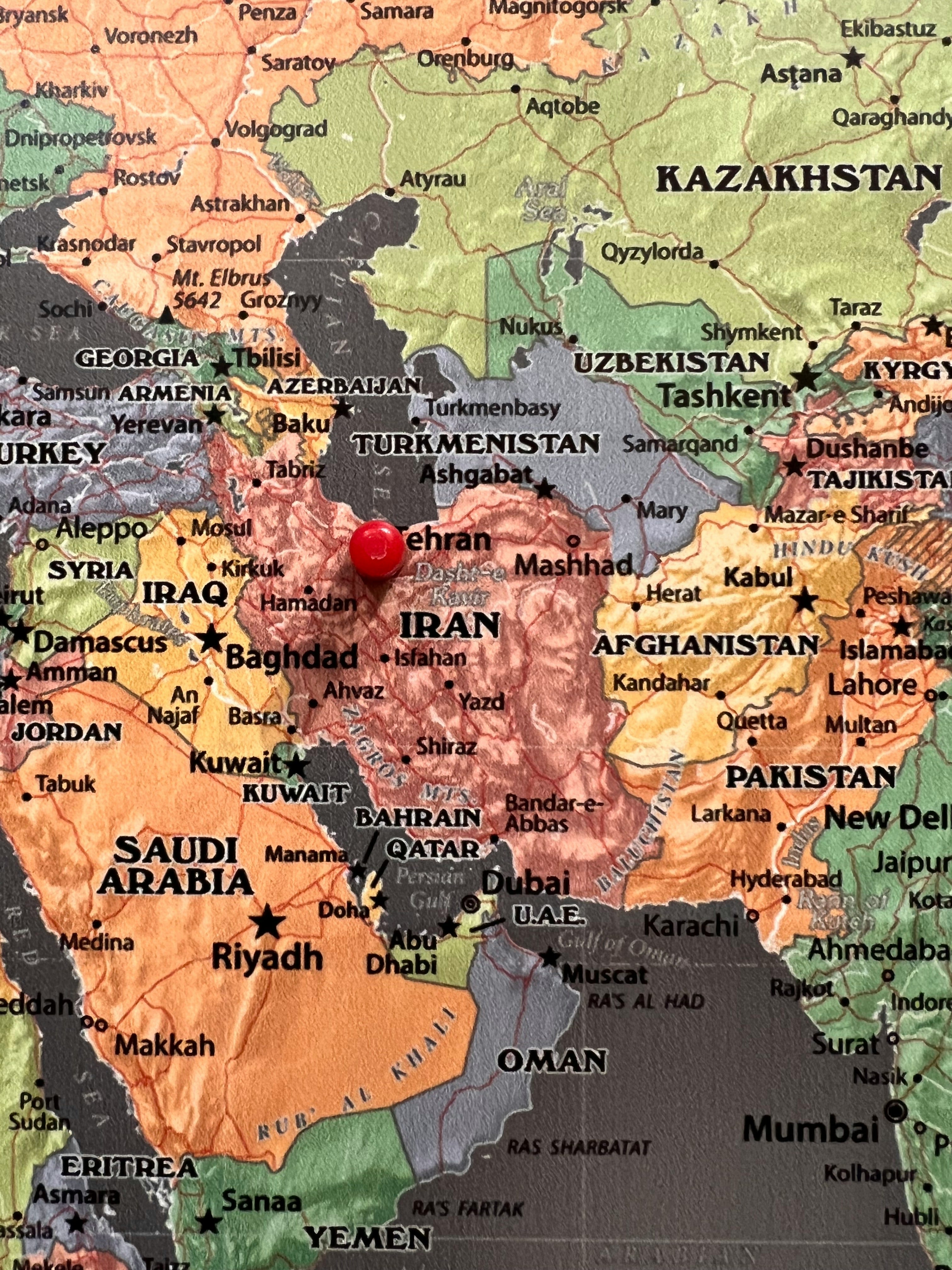
“The Strait of Hormuz - the key shipping lane off the coast of Iran that separates the Persian Gulf from the Gulf of Oman—has emerged as the biggest battleground in the conflict’s second week. Iran is using the strait as a pressure point, preventing nearly all commercial ships from passing through and driving up global oil prices.”
Then there is the “drone threat”:
“But the “bigger risk is drones,” Brew said, which Iran has “in abundance” and are “easy to launch.” The current U.S. military assessment is that the strait still isn’t secure and “that there need to be more strikes against Iranian positions on the coast to improve security before escorts and convoys can be assembled to move the shipping through the strait,””
And then there is something they’ve described as “missile math”:
“The Trump administration’s ability to complete its objectives (such as they are) hinges largely on so-called missile math—whether the United States can end the war before running short of weapons and air defenses.”
And these identified challenges don’t even take into account Iran’s nuclear desires which may only have grown with the US and Israel attack.
It appears though that the new, I think a better term might be, the remaining leadership is determined to dig in. As described at the ISPI Daily Focus:
“Mojtaba Khamenei calls for national unity, announces that the Strait of Hormuz will remain closed and that all US bases in the region must close or prepare to be attacked.”
“Iran is not on the verge of collapse, nor does it intend to give in. This was made clear in his first speech since taking office as Supreme Leader of the Islamic Republic, by Mojtaba Khamenei , who called for national unity in a speech announcing that the Strait of Hormuz “will remain closed to put pressure on Iran’s enemies.” In the message, read by a state television host, Khamenei called it “a difficult task” to assume leadership of the country after his predecessors, calling his father “a martyr.” Mojtaba Khamenei himself was reportedly injured in the February 28 attack, which killed his father, Ali Khamenei , as well as Mojtaba’s wife and their teenage son. “We must defeat the enemy, and our strength will help us do so, “ Khamenei said, calling on neighboring countries to close US bases.”
The dismay among experts and analysts over Trump actions is strong. David French a columnist at the FP seems to have caught this dismay:
“After years of muscle-bound preeminence, Americans had become addicted to the prerogatives of unmatched and seemingly unconstrained power. Trump’s winning electoral slogan, “America First”—which few people know dates from much earlier in the country’s history, when its strength was far less challenged—stands as a testament to this.”
“To the extent that it represents anything coherent at all, “America First” has always been based on wistful and naive nostalgia for simpler times. One hears the echo of this dream in the common, atavistic chant —“USA, USA”—including in the halls of Congress during Trump’s most recent State of the Union address. Life would indeed be marvelously simple if, as those who cry the country’s name seem to believe, self-righteousness and national pride were all that mattered.”